Summary details for Parthenium hysterophorus
Famine weed
Common names: Famine weed (English)
Origin: South and Central America
Description
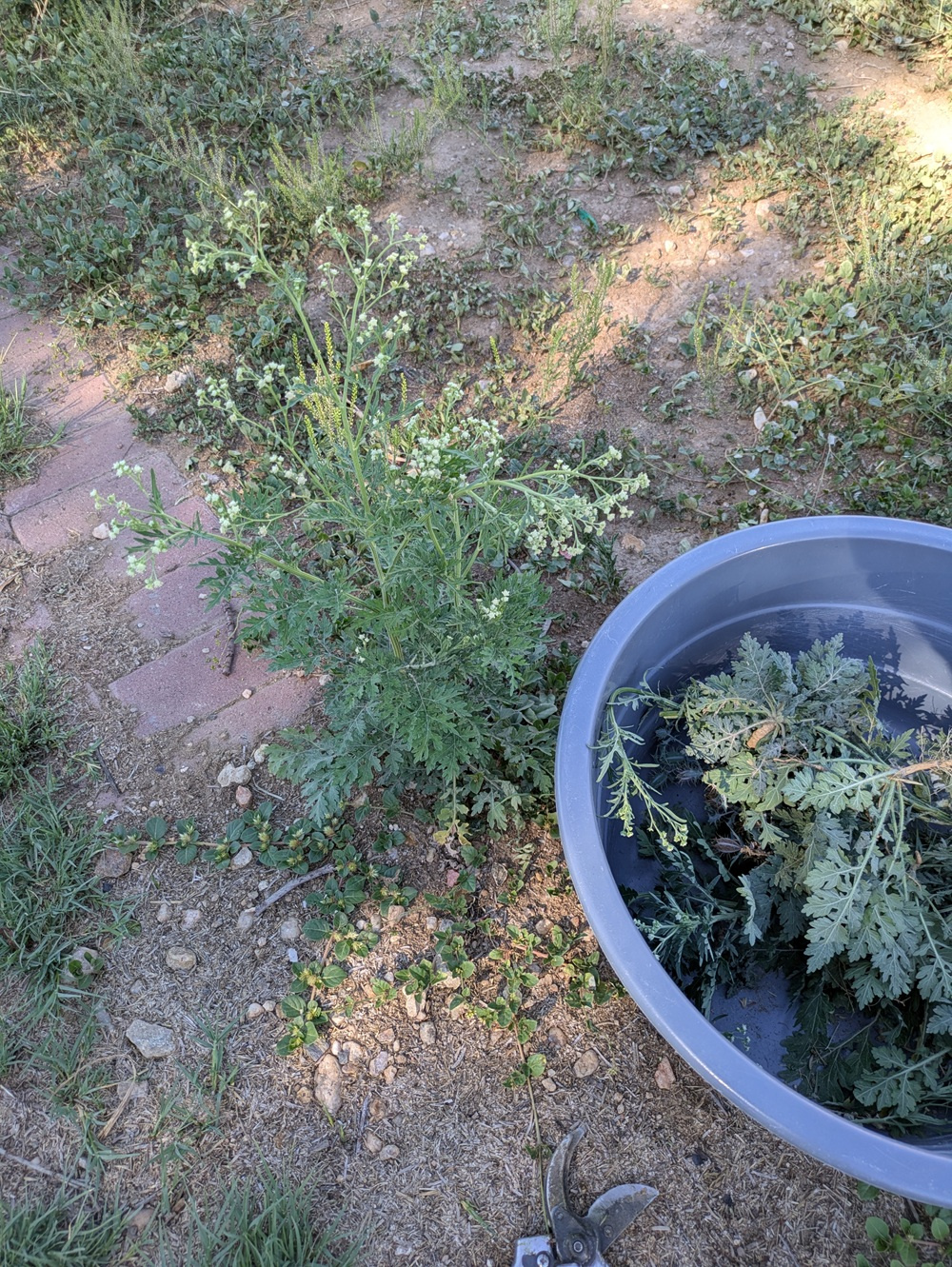
The germination period is very short, flowers appear and the maturing of seeds follows in quick succession. After germination, Parthenium grows to a rosette of lobed leaves. The flowers resemble a '1/2 carat diamond set in five claws'.
It is native to the American tropics but has since become an invasive species in East Asia, India, Australia, and parts of Africa. It has become infamous; it is considered one of the most noxious, harmful weeds species. It is known for its ability to reproduce quickly and abundantly, and prefers to grow in nutrient poor habitats. (Source: https://en.wikipedia.org/wiki/Parthenium_hysterophorus)
Discussion
Has been reported from Katima, Otavi, Windhoek as well as further south.
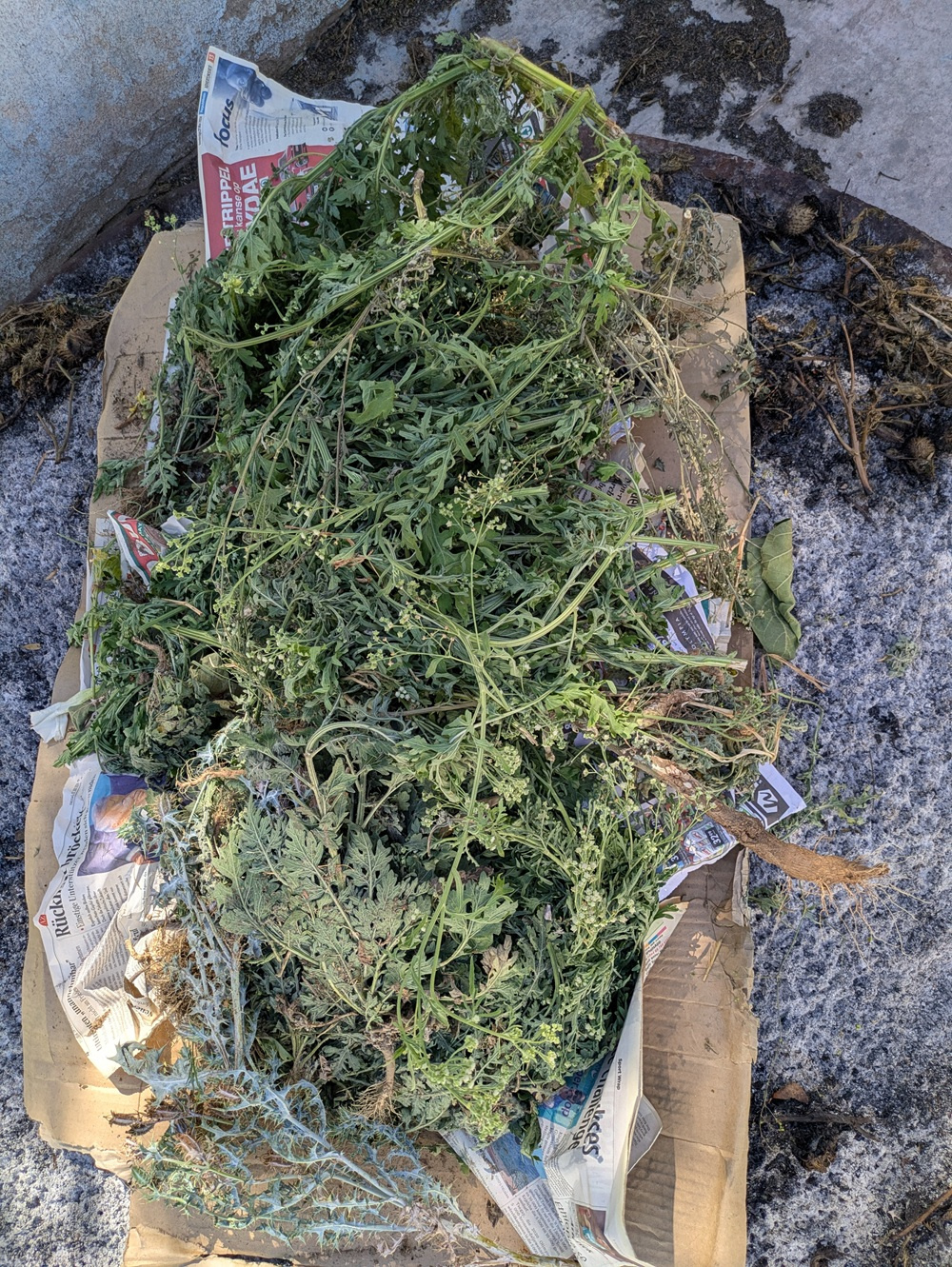
The need to control it is urgent. Dig out the plant as soon as possible. Burn the entire plant. Action needs to be taken before the problem is out of hand.
Pollen and seeds can be harmful to lungs and skin. Protective clothing should be worn when eradicating large stands.